The $15 Billion Pre-Midterm Promise: Politics or Policy?
A large aid number announced ahead of an election invites suspicion. The useful question is not motive but mechanics: who gets paid, how much, and when.
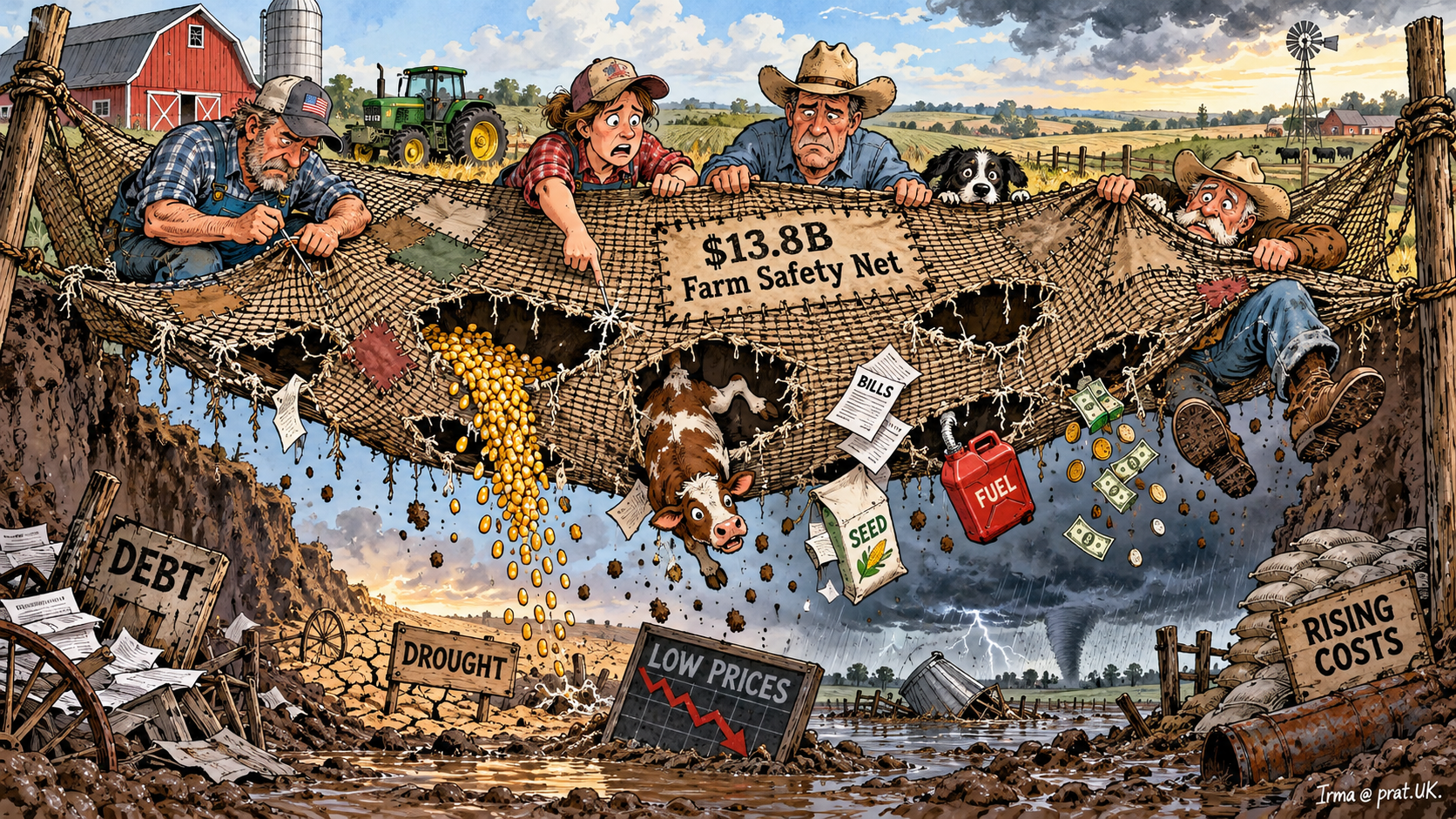
What does a big aid headline leave out?
The $15 billion figure in the title is the site’s headline claim and should be treated as reported. Verify the amount, the program name and the payment rules at the USDA and Farmers.gov before relying on any number. A promise is not a payment. Between an announcement and a check there are rules, sign-ups, eligibility tests and payment limits.
For farm lenders and operators, the useful questions are when the money arrives, which crops or livestock qualify and what documentation is required.
There is also a basic difference between announced and obligated money. Announced means a leader has said a number out loud. Obligated means the money has legal authority behind it. Paid means it has reached a bank account. Each stage can take months and can end up smaller than the headline.
What do supporters of the aid say?
Supporters argue that farmers face high input costs, low prices and trade disruptions that are not of their own making, and that timely aid keeps operations going. They say a Panhandle wheat or cattle operation that runs out of operating credit cannot wait for a perfect long-term bill.
They also argue that the timing of aid reflects when hardship shows up, not an election calendar. Both claims deserve attention.
Supporters add that rural communities feel losses together. When a wheat farm cuts back, the implement dealer, the elevator and the school district all notice. Aid, in their view, is about the community as well as the farm.
What do critics say about politics and timing?
Critics respond that aid announced near elections looks like an effort to win votes, that ad hoc programs lack the transparency of standing ones, and that payments flow disproportionately to large farms. Some also say that repeated aid weakens the case for market-driven discipline.
Neither side can prove motive from the outside. What can be checked is the program design: the legal authority, the funding source, who qualifies and how payments are calculated. The GAO and CBO publish reviews of past farm aid that can help you judge new proposals.
- Legal authority and funding source
- Who qualifies
- How payments are calculated
- Transparency of reporting
How should you judge any aid package?
Use a short checklist. Is it based on real losses or on a formula? Does it help the farms that are in trouble, or those with the most acres? Does it come with payment limits? Is it one time or does it set a precedent? Does it compete with existing tools like crop insurance and the ARC and PLC programs?
Read the program notice itself, not only the political statement. If a program is called new, ask what it replaces.
A second test is whether the payment helps the farm that is closest to failing or the one with the most acres. The two are not always the same, and the design usually tells you which one the authors had in mind.
How should you plan around promised money?
Do not spend money that has not been paid. Tell your lender about expected aid, but let them decide whether to count it in a cash flow. If you apply, gather production records, acreage reports, sales receipts and entity documents ahead of time. This farm money guide covers budgeting and record keeping, and this crop calendar guide helps you line up deadlines.
Your local FSA office will have the sign-up details. The Texas A&M AgriLife Extension service often explains eligibility in plain terms.
Where does this fit in the bigger conversation?
The tension between emergency aid and steady programs runs through the farm bill debate. For commentary, see farm.FM economics and farm.FM satire, which treat the same news with different tools. A farm.FM story on farm aid and election year politics adds some perspective.
Elections come and go. Your operation’s cash flow is year round. Plan for the second one.
Questions to bring to the FSA office
Ask which commodities and livestock types are covered, what the payment rate is based on, whether payment limits apply, and what the sign-up window is. Ask what records you need and who can help complete forms. Always confirm any date directly on the official notice.
If you rent land, ask how the payment is shared with the landlord.
Sources and further reading
- USDA: U.S. Department of Agriculture
- Farmers.gov: USDA one-stop site for producers
- GAO: government watchdog reports
- Congressional Budget Office: cost estimates for federal programs
- ARC and PLC: FSA commodity safety-net programs
- Texas A&M AgriLife Extension: Texas extension service
Ask locally: Ask your county FSA office and your lender.