Regulation and Property Rights
The Republican Plan to Streamline USDA Regulations
Few farmers enjoy paperwork. A push to streamline USDA rules promises less of it, while critics ask what protections might go with it.
What does streamlining mean in practice?
Streamlining can mean combining forms, shortening review times, clarifying rules, removing duplicate reporting or consolidating offices. Supporters of the Republican plan describe it as cutting red tape so producers can spend more time farming and less on compliance.
The USDA publishes its regulations and program notices, and the Federal Register carries proposed and final rules. Read the specifics rather than the slogan.
Supporters often point out that rules built for large agribusiness can strain small producers, who have no compliance officer. A rancher filling in forms at the kitchen table at night is their picture of the problem.
Streamlining also covers how fast the agency answers a question. A phone call that gets a straight answer in a day saves more time than any new form.
Where does paperwork hit farms hardest?
Producers often point to program enrollment, acreage reporting, conservation plans, loan applications, animal movement rules, environmental reviews and permit processes. A simple example: a farm that deals with FSA, NRCS and RMA may submit overlapping information to each. Supporters say shared data could save everyone time.
The Farmers.gov site is one effort to bring USDA services into one place. Check it for current tools.
Another frequent complaint is timing. A permit or review that takes months can force a farm to miss a season. Faster, predictable decisions, even when the answer is no, help producers plan.
Ask your county office which forms can be filed online and which still need a signature in person, and keep a checklist of what each office asks for every year.
- Program enrollment
- Acreage reporting
- Environmental reviews
- Animal movement rules
What do supporters argue?
Supporters argue that heavy regulation raises costs, slows investment and falls hardest on small operations without compliance staff. They say clearer, faster rules are fairer, and that reducing unnecessary requirements frees resources for farming. Many conservative groups pair this with calls for property rights protections.
For commentary on how that argument plays out, see farm.FM economics.
Supporters also frame the issue as one of fairness, saying rules should be clear enough that a reasonable person can follow them without hiring a lawyer. That is a standard worth applying to any rule, from any administration.
What do critics respond?
Critics respond that some rules protect food safety, animal health, water quality and fair markets, and that cutting them may shift costs to others or create risks. Some also worry that shrinking agency staff can slow service. Reasonable people can agree that paperwork should be simpler and still disagree about which rules go.
Facts that are disputed include the true cost of specific regulations and how much a change would save. Look for cost analyses and who produced them. The GAO reviews federal regulatory practices.
There is also a question of process. Rules that are rolled back quickly can be reversed just as quickly by the next administration, creating whiplash for producers. Both sides say they want stability; they disagree on which direction it should favor.
How do you follow and shape a rule?
Proposed rules go out for public comment. You can read them, comment as an individual and ask your producer organization to comment. Specific, factual comments that explain how a rule affects your operation carry more weight than general complaints. Check deadlines on the notice itself.
Groups like the Texas Farm Bureau and the American Farm Bureau Federation track rules, and your AgriLife Extension office can help you understand them.
A short comment that tells a story works well: what you farm, where, what the rule requires of you, how much time or money it costs and what you suggest instead. Keep it factual and respectful, and keep a copy for your records.
How can a farm reduce paperwork pain now?
Keep records in one place, use digital tools your FSA office supports, calendar deadlines and ask for help early. This farm money guide covers recordkeeping, and this small farm guide helps new operations organize.
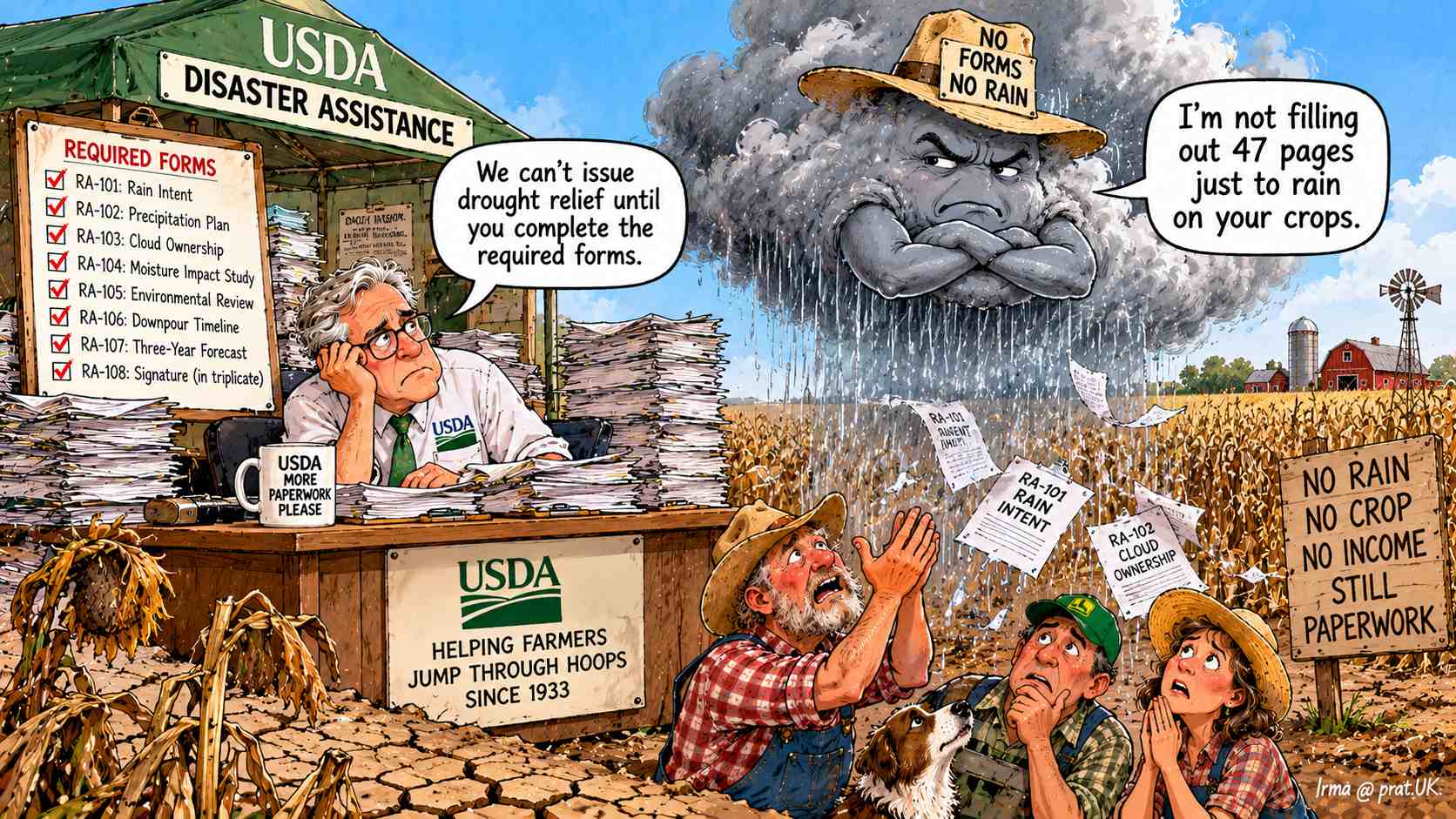
Over at farm.FM they have a satirical take on bureaucracy in a farm.FM story on farm paperwork, and the satire section has more. Humor helps, but the forms still need filing.
This article is general information about the policy debate. It is not legal advice, and it does not assert what any specific rule says, so verify each requirement with the agency before you act.
Sources and further reading
- USDA: U.S. Department of Agriculture
- Farmers.gov: USDA one-stop site for producers
- GAO: government watchdog reports
- Texas Farm Bureau: state farm organization
- American Farm Bureau Federation: national farm organization
- Texas A&M AgriLife Extension: Texas extension service
Ask locally: Ask your county FSA office and your Texas AgriLife Extension agent.