The Conservative Case for a Stronger Farm Safety Net
Some conservatives who prize small government still argue for a stronger farm safety net. Here is how that case is made, and where it meets pushback.
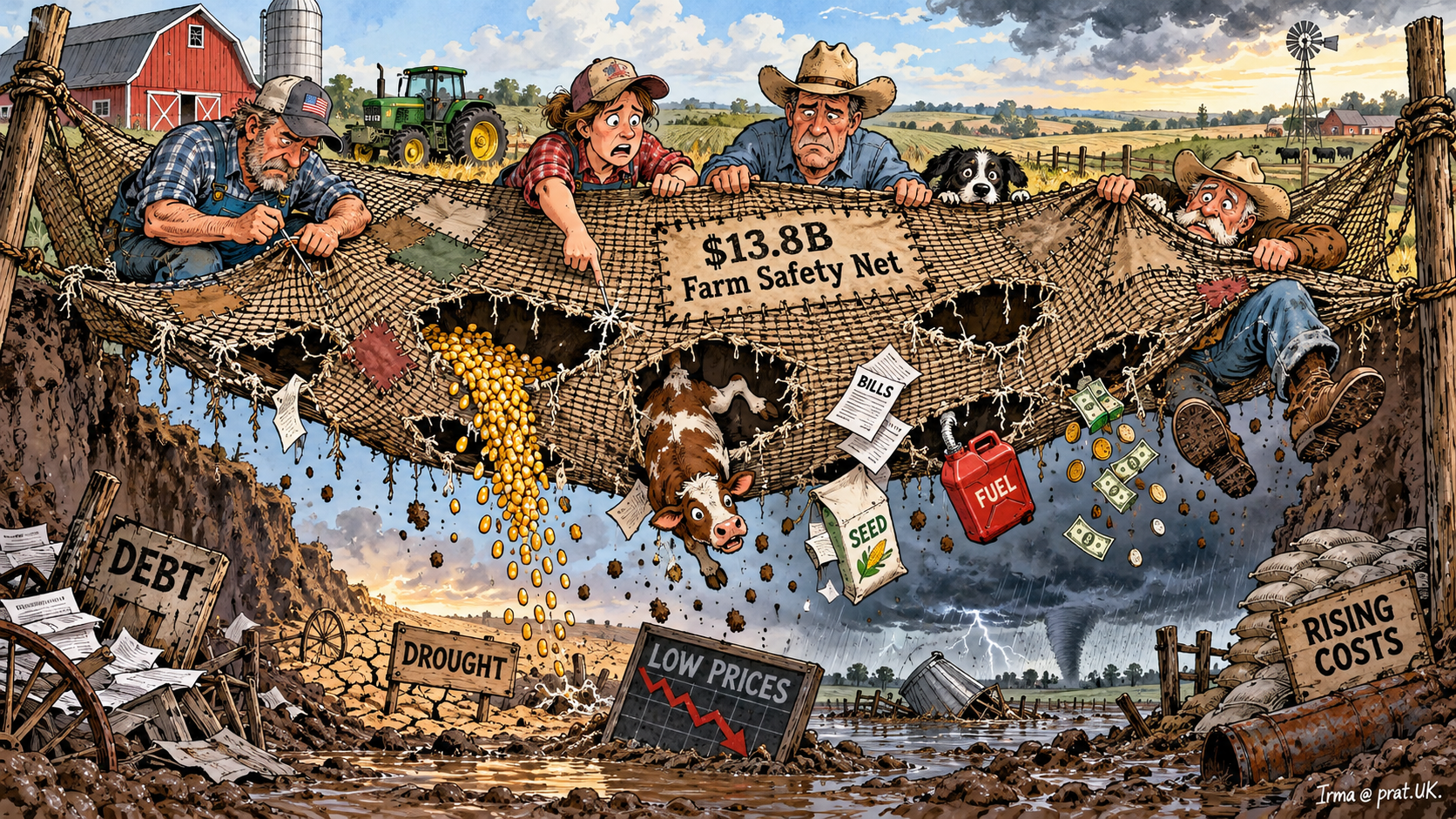
Why would a limited-government view support a safety net?
The argument starts with food and risk. Supporters say agriculture faces weather, disease and global price swings that no operator controls, and that a stable domestic food supply is a legitimate public interest. In this view a well-designed safety net is insurance for a national asset, not a handout.
The USDA and Farm Service Agency run most of the programs under discussion, so reading their descriptions is the best way to see what is actually on offer.
Many conservatives also distinguish between a market-distorting subsidy and a rules-based backstop. The first picks winners. The second sets conditions in advance and applies them to everyone who qualifies. Supporters of a stronger net usually say they mean the second kind.
What does a stronger net mean in practice?
Proposals vary. Some mean higher reference prices for commodity programs. Some mean better crop insurance options. Some mean faster, rule-based disaster aid in place of one-off packages. The point of rules is that producers and lenders can plan around them.
The ARC and PLC pages and the Risk Management Agency explain existing tools. Whether any particular change is stronger or just bigger is a question about design, not size.
Some versions would tie help to a farm’s own insurance choices, so that producers who buy coverage get a better backstop than those who ignore risk. Others would simplify paperwork so smaller operations are not shut out by the cost of compliance.
- Higher or updated reference prices
- Crop insurance improvements
- Predictable disaster rules
The case supporters make
Supporters argue that predictable programs lower borrowing costs, keep land in production through downturns and reduce the need for emergency spending. They add that foreign competitors often receive state support, so U.S. farmers would be at a disadvantage without a net.
They also note that rural economies in the Texas Panhandle depend on a steady farm base: implement dealers, grain elevators, feedyards and Main Street businesses all feel a bad year. For more commentary on how that debate plays out, see the economics desk at farm.FM agribusiness.
There is also a national security strand to the argument, which is that a country that cannot feed itself loses bargaining power. Whether that logic justifies a given program is the part the other side contests, but it is the part supporters lean on most.
The strongest counter-arguments
Critics, including some other conservatives, respond that subsidies distort markets, are capitalized into land rents and flow mostly to larger operations. They say that a net that cushions every downturn can slow necessary adjustment, and that the cost lands on taxpayers.
The CBO and GAO have published reviews of farm programs, and they are worth reading for the disputed points: who benefits, how much, and with what side effects. Facts here are contested, so do not accept any single source.
There is a middle position too: keep the net, but tighten payment limits and target help to operators who would otherwise be forced out. That compromise shows up in many proposals from both sides, and it is worth looking for in any bill text you read.
How to judge a proposal on its details
Ask five questions. Who is eligible? How are payments calculated? Is there a payment limit? Does it reward planting decisions or neutral decisions? What does it cost over time? A proposal that cannot answer those clearly is not ready.
If you are weighing your own risk tools, this crop planning guide and this farm money guide help with the planning side. Call your local FSA office to learn how current programs would treat your farm.
Where this debate goes next
Expect the argument to continue in committee rooms and at county Farm Bureau meetings. The Senate Agriculture Committee and American Farm Bureau Federation both publish positions you can read directly.
Over at farm.FM there is a lighter take in a farm.FM story on the safety net debate. Keep the humor, but read the primary documents too.
What a Panhandle operator can do now
Whatever Congress does, a farm is better off with its own plan. Build a cash reserve, know your break-even for each enterprise, review your insurance every year with an agent, and talk to your lender before a bad season rather than after it.
The ranching section at farm.FM covers the money side of ranch life, and the local Texas A&M AgriLife Extension office runs risk management and marketing programs that fit this approach, and they are a neutral source on what works for Panhandle conditions.
Sources and further reading
- USDA: U.S. Department of Agriculture
- USDA Farm Service Agency: FSA farm programs and loans
- ARC and PLC: FSA commodity safety-net programs
- USDA Risk Management Agency: crop insurance
- Congressional Budget Office: cost estimates for federal programs
- Senate Agriculture Committee: farm bill and ag policy in the Senate
Ask locally: Ask your county FSA office and a Texas Farm Bureau policy contact in the Amarillo area.